
Loading...
Champaign Concrete handles driveways, patios, sidewalks, and foundations for homeowners across Champaign - with free estimates and replies within one business day.
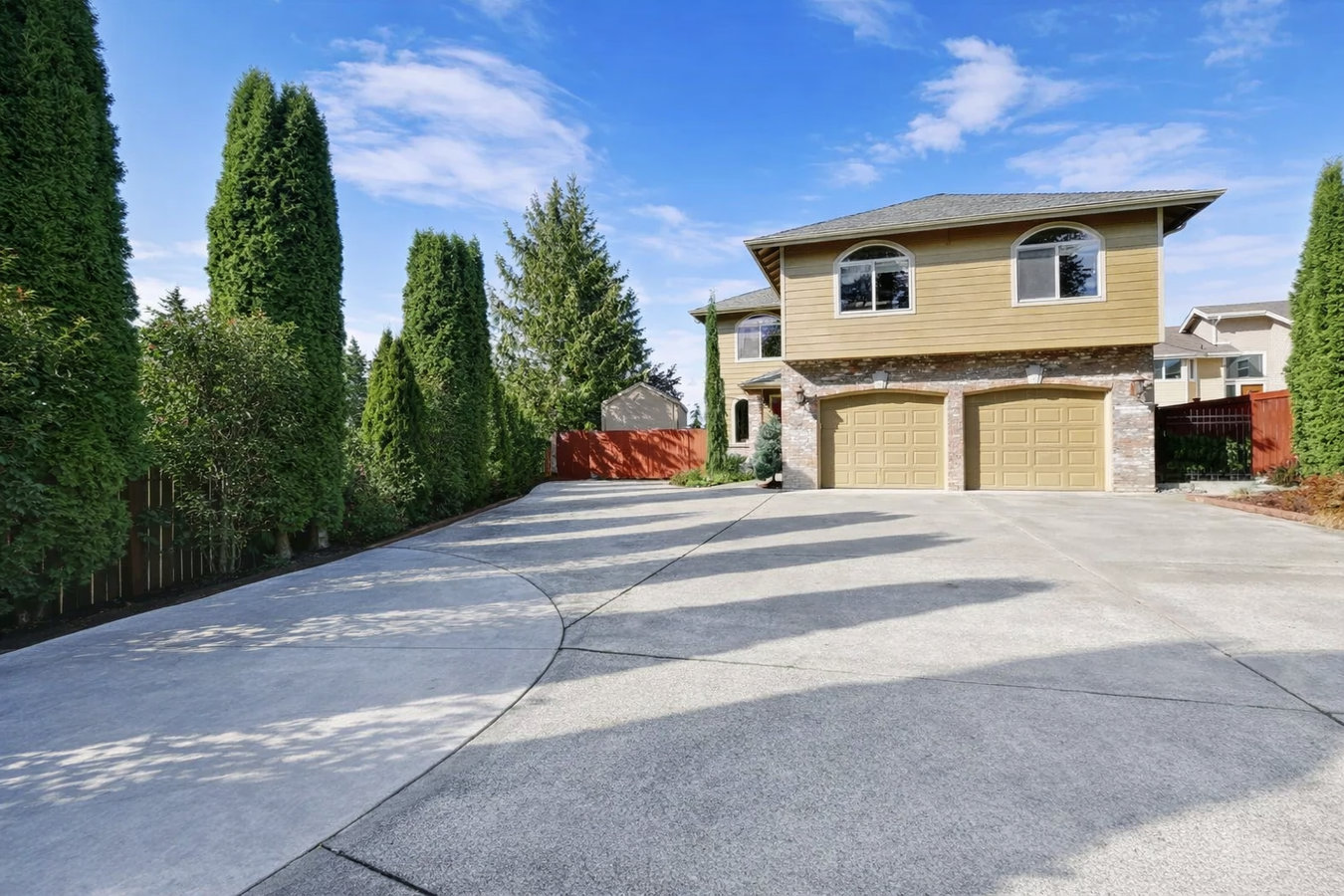
Champaign winters cycle through freeze and thaw repeatedly from November through March, and that movement is the main reason driveways crack and heave on this side of Illinois. We build driveways with a compacted gravel base and a properly mixed slab so they hold up through the full range of central Illinois weather. If your current driveway is showing cracks or sunken sections, learn more on our concrete driveway building page.
Many Champaign homeowners have backyards that turn to mud every spring because the clay soil drains slowly. A concrete patio gives you a dry, usable surface for outdoor furniture and grilling, and when sloped correctly it actually diverts water away from your foundation instead of letting it pool against the house.
Older Champaign neighborhoods have sidewalks that have shifted and heaved after decades of freeze-thaw cycles working on the clay underneath. Uneven sidewalk sections are a trip hazard and in some cases a code violation - replacing them with a properly prepared slab solves both problems at once.
Homes built in Champaign during the 1950s through 1970s often have garage floors that have never been replaced. Those older slabs are typically thin and cracked, and road salt tracked in during winter makes the surface flake faster. A new garage floor poured to current thickness standards changes how that space looks and functions.
Champaign's clay soil and seasonal moisture levels create real demands on slab foundations. New construction and additions in this area need foundations engineered for the local soil conditions - not a generic pour. We work with the City of Champaign Building Safety Division to permit and inspect all foundation work.
Properties with grade changes in Champaign deal with soil erosion every spring when snowmelt and heavy rain hit clay that drains slowly. A concrete retaining wall stops that erosion and creates flat, usable yard space that would otherwise wash away year after year.
Champaign sits on flat, clay-heavy prairie soil that behaves differently from the sandy or loamy soil you find in other parts of the country. Clay holds water for a long time after rain, and it swells when wet and shrinks when dry. That constant movement is the reason concrete driveways, sidewalks, and patio slabs crack and heave here faster than homeowners expect. Without a properly prepared base - excavated deep enough and filled with compacted gravel - even a well-poured slab will shift within a few years.
The winters here add another layer of stress. Champaign temperatures drop well below freezing from December through February, and the frost depth can reach 30 to 40 inches in a cold year. Every freeze-thaw cycle pushes water into tiny surface pores, expands them, and chips the concrete from the inside out. Contractors who know this climate use a mix designed to resist that process and recommend sealing the surface before the first winter. A contractor quoting below market rate in Champaign is almost always skipping one of these steps, and you will pay for it in repairs within a few years.
We pull permits regularly from the City of Champaign Building Safety Division and are familiar with what their inspectors look for on flatwork and foundation projects. That means no surprises at inspection time, and paperwork that protects you if you ever sell the home.
Champaign is a city of distinct neighborhoods. The older streets north of campus - many with homes built before 1950 - have different concrete challenges than the ranch houses in the established mid-century neighborhoods or the newer subdivisions on the south and west sides near the Market Place Mall on Neil Street. Near Memorial Stadium and the University of Illinois campus, we see a lot of rental properties where deferred maintenance has let flatwork deteriorate for years. On the south side, homes from the 1990s are hitting the age where original driveways and sidewalks are ready for replacement. We know the difference and approach each job accordingly.
Our team also regularly works in neighboring Urbana, where the housing stock and soil conditions are nearly identical to Champaign. If your project sits near the city line or if you have a second property in Urbana, we cover both without any additional mobilization cost.
Reach out by phone or through the contact form and we will reply within one business day. We ask a few quick questions about your project so the site visit is focused and efficient.
We visit your property, measure the area, check the existing surface and soil conditions, and give you a written estimate before we leave. No cost, no pressure - and the estimate covers everything so the price does not change when work starts.
Once you approve the estimate, we handle the permit with the City of Champaign Building Safety Division. Scheduling typically takes a few weeks during peak season, so the sooner you reach out, the sooner we can lock in a date.
The crew arrives on the scheduled day, completes the job, and leaves the site clean. We walk you through the finished work and tell you exactly when the surface is safe for foot traffic and vehicle use - no guessing.
We serve homeowners across Champaign, IL - driveways, patios, sidewalks, foundations, and more. Free estimates, no pressure, and a reply within one business day.
(217) 803-9330Champaign is a mid-sized city of roughly 89,000 people in east-central Illinois, anchored by the University of Illinois Urbana-Champaign, one of the largest public universities in the country. The university shapes the character of the entire city - its tens of thousands of students and staff make Champaign more than half rental housing, which means homeowners here are in the minority and property condition matters a lot for standing out in this market. Major employers like Carle Health and Christie Clinic bring in professionals who own homes and invest in them long-term, especially in the established neighborhoods on the north and west sides of the city.
Champaign has distinct neighborhoods with very different housing ages and characters. The north side has some of the city's oldest housing, with many homes built between the 1890s and 1940s featuring brick construction and wood-frame exteriors that need regular attention. The Campustown area near the University of Illinois is dense with converted rental properties where maintenance often gets deferred. Newer subdivisions on the south and west sides - built mostly from the 1990s through the 2000s - are hitting the age where original concrete driveways and sidewalks need replacement. Neighboring Savoy to the south and Urbana to the east share the same soil and climate conditions, and we work across all three communities regularly.
Durable concrete driveways designed for long-lasting curb appeal.
Learn moreCustom patio installations for comfortable outdoor living spaces.
Learn moreDecorative stamped finishes that mimic natural stone and brick.
Learn moreSafe, level sidewalks for residential and commercial properties.
Learn moreSmooth, sealed garage floors built to handle daily vehicle use.
Learn moreArtistic concrete finishes that enhance any interior or exterior.
Learn moreStructural retaining walls that control erosion and grade changes.
Learn moreProfessional floor pours for homes, shops, and industrial spaces.
Learn moreSlip-resistant pool surrounds built for safety and style.
Learn moreSolid, code-compliant steps for entryways and multi-level access.
Learn moreEngineered slab foundations that provide a stable base for construction.
Learn moreComplete foundation work for new builds and additions.
Learn moreHeavy-duty parking surfaces built to withstand high traffic loads.
Learn morePrecision footings that anchor structures firmly to the ground.
Learn moreFoundation lifting and leveling to correct settling and sinking.
Learn moreClean, precise concrete cutting for repairs, utilities, and modifications.
Learn moreServing these cities and communities.
Winter and spring are the busiest seasons for concrete repair and replacement in central Illinois - reach out now to get on the schedule before the rush.