
Loading...
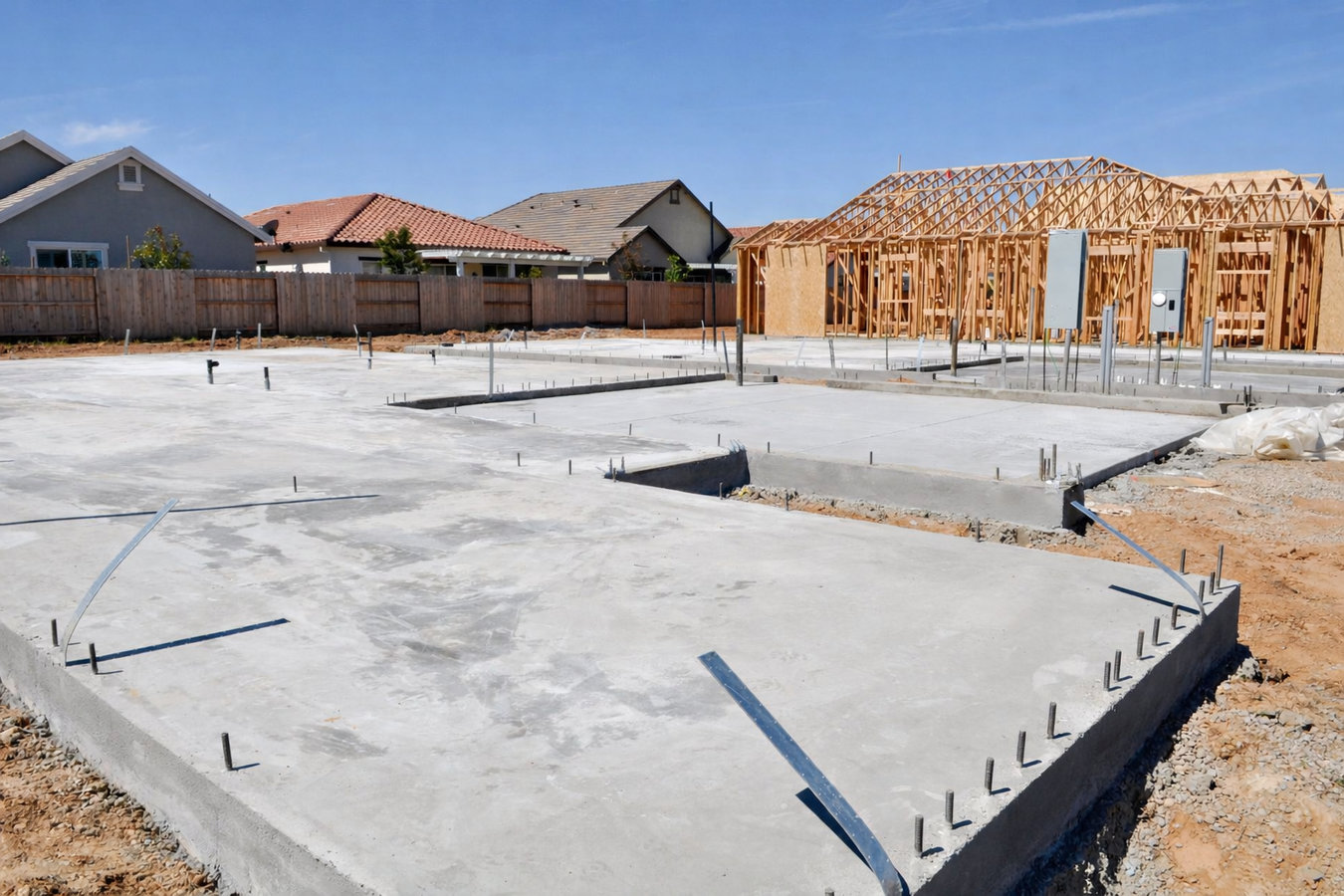
A foundation failure shows up everywhere - sticking doors, cracked walls, water in the basement. We install foundations in Champaign that are engineered for the soil, properly permitted, and waterproofed to keep moisture out for decades.
Foundation installation in Champaign involves excavating to below the frost line, building forms, placing steel reinforcement, pouring the concrete, applying waterproofing, and backfilling once the foundation has cured - most standard residential projects take one to two weeks of active work plus a permit and curing period that extends the total timeline to four to six weeks.
Your foundation is the single most important structural element in your home - every wall, floor, and roof above it depends on it staying stable. In Champaign, that means building below the roughly 42-inch frost line and accounting for the clay soil that covers most of the area. Many homeowners also need foundation raising work alongside a new installation - whether that is releveling a settled section or addressing drainage issues that contributed to the original problem.
The most common mistake homeowners make is choosing a contractor based on price alone, only to discover the winning bid skipped waterproofing, used inadequate reinforcement, or never pulled a permit. In Champaign's climate, those shortcuts show up within a few years as cracks, moisture intrusion, and shifting - problems that are far more expensive to fix than to prevent.
If interior doors that used to swing freely now drag on the floor or refuse to latch, or gaps are forming at window frame corners, the structure may be shifting. In Champaign, this is often tied to clay soil moving seasonally - but when movement becomes permanent rather than seasonal, the foundation needs assessment.
Small hairline cracks are common and not always serious. But cracks wider than a quarter-inch, diagonal cracks from corners, or cracks where one side sits higher than the other are warning signs. Champaign's clay soil and freeze-thaw cycles put foundations under more pressure than in many other parts of the country.
Champaign's flat terrain means rainwater has nowhere to go quickly, and a foundation without proper waterproofing or grading will eventually let that water in. Damp spots, white chalky deposits on concrete walls, or standing water after a storm all indicate the waterproofing system is failing or was never adequate.
Many homes in Champaign's older neighborhoods were built before current standards for reinforcement and waterproofing were common. If your home was built before the mid-1970s and has never had a foundation assessment, it is worth having one done - especially before a major renovation or sale.
We install poured concrete foundations for new homes, additions, and replacement projects across the Champaign area. Every job includes permit handling, excavation, forming, steel reinforcement, waterproofing, and final backfill and grading. For projects where a full basement is not required, we also offer concrete parking lot building and other flatwork services that can be coordinated alongside foundation work to keep your project on a single timeline with one contractor managing the schedule.
Waterproofing is included as a standard component on every basement foundation we install - not an optional add-on. Champaign's flat terrain and heavy spring rains create real drainage challenges, and a foundation without proper exterior waterproofing will eventually let moisture through. We also grade the surrounding soil to direct water away from the walls as part of the final backfill process.
For homeowners building from the ground up who need a basement or slab foundation installed to current Champaign permit and code requirements.
Suits homeowners adding a significant addition to an existing home who need a new foundation section tied correctly to the original structure.
For projects requiring poured concrete walls and floor - includes excavation, forming, reinforcement, waterproofing membrane, and drainage system.
For older Champaign homes with failing foundations where repair is no longer cost effective - a full replacement brings the home up to current standards.
Champaign sits on deep glacially deposited clay soils that swell and shrink with the seasons - putting constant low-level stress on any foundation in the area. Illinois also requires foundations to extend below the frost line, which in Champaign is approximately 42 inches. That depth affects excavation cost and timeline, and it is non-negotiable: a foundation that does not go deep enough will heave as the ground freezes and thaws each winter. Homeowners in Danville and Bloomington face similar conditions - the whole region shares the same soil profile and frost depth requirements.
A significant share of Champaign's residential housing was built between the 1950s and 1970s - homes that are now reaching the age where original foundations show serious wear. Many of these older properties were built before modern waterproofing and reinforcement practices were standard, and they are seeing the results in damp basements and shifting walls. The City of Champaign also has active permit and inspection requirements for foundation work, which means any contractor operating here needs to know the local process - not just general construction practice. Contractors who have worked in Champaign neighborhoods understand which blocks have the most problematic soil and how to plan accordingly before a shovel goes in the ground.
We schedule a site visit within one business day of your inquiry. We look at the lot, discuss your plans, and give you a written quote covering excavation, materials, labor, waterproofing, and cleanup - no vague line items and no cost-per-square-foot guesses without seeing your actual conditions.
We submit the building permit to the City of Champaign and contact Illinois JULIE to have buried utility lines marked before any digging starts. Both steps are required and handled entirely by us - you do not need to visit any office or make any calls.
The crew excavates to below Champaign's 42-inch frost depth, builds the concrete forms, and places steel reinforcement inside. A city inspector visits before the pour to verify the work meets local requirements - this is the checkpoint that protects your investment.
The concrete is poured and allowed to cure - at least a week before any significant load is placed on it. We apply exterior waterproofing and install drainage systems before backfilling and grading the surrounding soil to direct water away from the foundation walls.
We visit your property, assess soil and drainage conditions, and give you a detailed quote - no pressure, no obligation.
(217) 803-9330We pull the City of Champaign building permit on every foundation project and schedule all required city inspections - including the pre-pour inspection that checks our reinforcement and forming before concrete goes in. Your project is fully legal and documented, which matters when you sell.
We do not sell waterproofing as an optional upgrade. Champaign's flat terrain and spring rain patterns mean any basement foundation without proper exterior waterproofing will eventually have moisture issues - so we include it in every full basement installation we quote.
We have completed foundation installations across Champaign, Urbana, Danville, and surrounding communities - all of which share the same 42-inch frost depth requirement and clay soil profile. That local experience means we plan for the actual ground conditions rather than discovering them mid-project.
Our written quotes break out excavation, forming, concrete, reinforcement, waterproofing, backfill, and cleanup separately. The American Society of Concrete Contractors recommends itemized quotes precisely so homeowners can compare bids fairly - a lump-sum quote that includes no scope detail is almost always missing something.
Foundation work is one area where the quality of the contractor directly determines how your home performs for decades. Call us or use the contact form and we will schedule your site visit within a business day.
For commercial and residential projects that need a durable concrete surface alongside or after foundation work is complete.
Learn moreIf your existing foundation has settled or shifted, foundation raising addresses the movement before it causes further structural damage.
Learn morePermit season fills up fast - lock in your project start date before the spring rush and avoid a long wait for the best local contractors.