
Loading...
Starting a new build or replacing a failing base? We handle every step - from soil prep and permits to the pour itself - so your structure sits on a foundation built for Champaign clay and freeze-thaw winters.
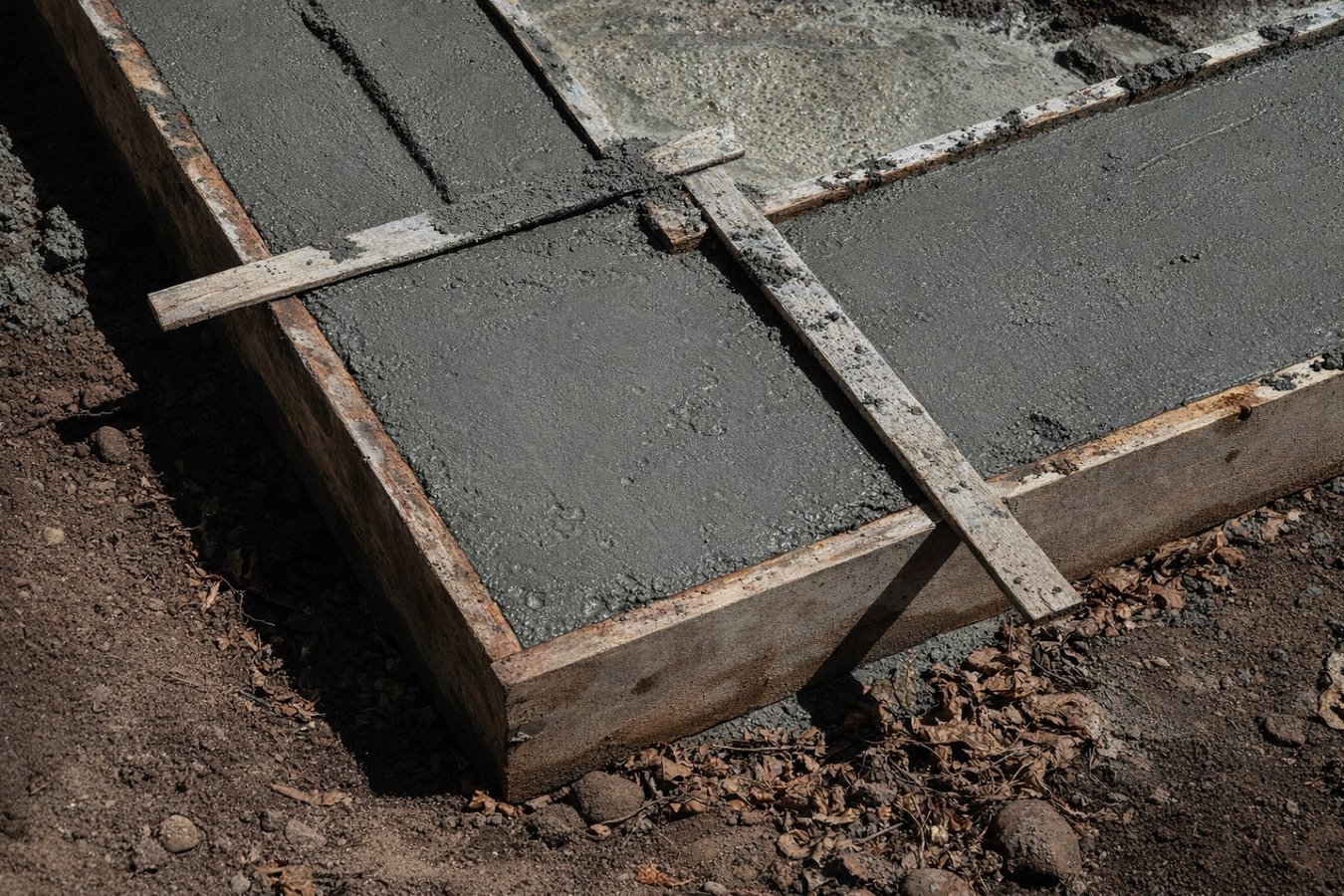
Slab foundation building in Champaign involves grading and compacting the soil, laying a gravel drainage layer, placing steel reinforcement, and pouring a four-to-six-inch concrete slab - most residential jobs take two to four days of active work plus a curing period of at least a week before construction can resume.
A slab is the starting point for any new structure - a home, a garage, a workshop, or a room addition. Getting it right matters more than almost any other decision on the project, because everything built on top of it depends on the slab staying level and solid through years of Champaign weather. If your project also calls for concrete footings, we handle both together so the base system works as a unit.
The single biggest mistake homeowners see after the fact is a slab that was poured without proper base preparation. In Champaign, where clay soils shift with the seasons and frost can penetrate several feet down in a hard winter, skipping the gravel layer or rushing the compaction step means cracks within a few years - even on a well-poured slab.
If you are building a new home, garage, or addition, you need a foundation before anything else can go up. A slab is often the right choice for single-story structures in Champaign where a basement is not required - it is faster to build and performs well when the site is properly prepared.
Small hairline cracks are common and usually not structural. But cracks wider than a quarter-inch, cracks that run in a stair-step pattern, or sections that have shifted so one side sits higher than the other are signs the existing slab is failing. In Champaign, clay soil movement is the most common cause - and at some point, replacement beats continued repair.
Standing water on a garage floor or basement slab after rain usually means the slab was not poured with the right slope, or has settled unevenly over time. Champaign's wet springs make drainage a real concern, and a slab that holds water is more likely to develop surface damage and eventually crack.
Some older Champaign properties - especially detached garages or outbuildings added decades ago - were built on thin concrete pads never designed to carry significant weight. If an existing slab flexes, crumbles at the edges, or has heaved unevenly through multiple winters, a full replacement with a properly engineered slab is usually the right answer.
Every slab foundation project starts with proper site prep - grading, compaction, gravel base, vapor barrier, and steel reinforcement placed before a single yard of concrete is ordered. We also handle the City of Champaign permit and schedule all required inspections as part of our standard process. For projects that require a full foundation installation including basement walls or a more complex foundation system, we assess the right approach for your specific lot and structure type.
Slab thickness, reinforcement spacing, and edge footing depth all get spec'd to match what your project actually needs - a garage slab is different from the base for a two-story addition. We also take into account your soil conditions and drainage situation before we start, rather than using a one-size approach that ignores what is actually under your lot.
Best for homeowners starting a new build who need a foundation engineered for their structure type and Champaign soil conditions.
For existing slabs that have failed beyond repair - demo, site prep, and a new pour that starts with the right base this time.
Suits homeowners adding a detached garage, workshop, or accessory structure that needs a properly engineered base, not just a thin pad.
For homeowners expanding an existing home with a bump-out or new room that needs a foundation tied correctly to the existing structure.
Champaign sits on deep deposits of glacially deposited clay soil that swells when wet and shrinks when dry. This repeated seasonal movement is the leading cause of slab cracking and settling in this area. It is not a random bad-luck outcome - it is predictable, and a contractor who accounts for it in the base prep will build a slab that lasts. The frost line in central Illinois reaches 30 to 40 inches in a hard winter, which means anything poured without proper insulation or timing during cold weather can set improperly before you ever notice a problem. Homeowners in Rantoul and Savoy face the same soil and climate conditions as Champaign proper - the whole region sits on the same glacial plain.
Champaign also sees significant construction demand tied to the University of Illinois, which means the best local concrete contractors book up fast in peak building season - roughly May through September. Homeowners who wait until summer to start planning a slab project often find a four-to-six-week wait for the contractors worth hiring. Getting quotes and locking in a schedule in late winter or early spring is the most effective way to avoid delays and have your project completed before the heat of July and August pushes outdoor concrete work into trickier conditions.
We visit your property, assess the soil and site conditions, and give you a written quote that breaks down every cost - site prep, materials, labor, permits, and cleanup. We reply within one business day of your inquiry.
Once you approve the quote, we submit the permit application to the City of Champaign Building Safety Division and confirm your project start date. Permit approval typically takes one to two weeks - we handle all of it, you do not need to visit any office.
The crew grades and compacts the soil, lays the gravel drainage layer, installs the vapor barrier, and places the steel reinforcement. The city inspector visits during this phase - before any concrete is ordered - to verify the base meets code.
Concrete is delivered and poured in a single day for most residential slabs. After finishing, the slab needs at least a week before foot traffic and a full month to reach full strength. We protect the surface through the curing period and give you a clear timeline for when construction can resume.
We visit your site, review soil conditions, and give you a written quote - no obligation and no surprise add-ons later.
(217) 803-9330We submit the City of Champaign building permit application and coordinate all required inspections as part of every project - no exceptions. This means your foundation is legally documented from day one, with a city inspector checking the base before concrete covers it permanently.
We account for central Illinois clay soils in every base we prepare - proper compaction, gravel drainage layer, and vapor barrier are standard, not optional upgrades. This is what separates a slab that stays level for 30 years from one that starts cracking in five.
We have completed slab foundation projects across Champaign, Urbana, Savoy, and the surrounding communities. Local experience means we know which neighborhoods have the most challenging soil conditions and how to plan around them - not figure it out on your dime.
Every estimate we provide breaks down site prep, materials, labor, permit fees, and cleanup individually. The American Concrete Institute sets quality standards for residential concrete work - we follow them, and our quotes reflect exactly what that means for your project.
Taken together, these are not marketing claims - they are the practical things that determine whether your slab holds up or starts causing problems. Call us or submit a contact form and we will schedule a site visit within a few days.
Need a full basement or a more complex foundation system? We handle poured concrete foundation walls for homes and additions in Champaign.
Learn moreFootings provide the load-bearing base under walls and posts - often poured alongside a slab to create a complete foundation system.
Learn moreSpring and summer bookings fill up fast - reach out now to get on the schedule before the best dates are gone.