
Loading...
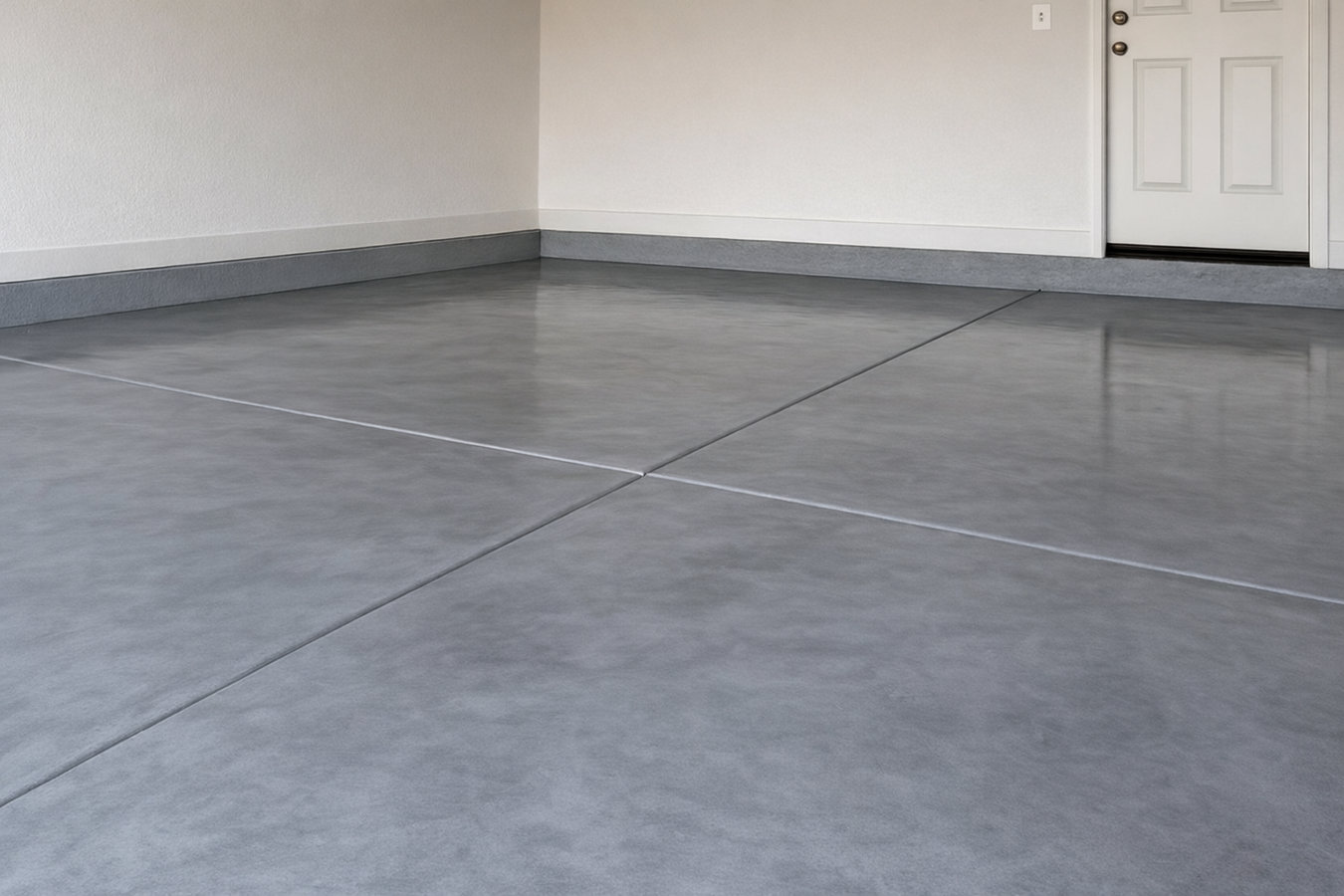
Cracked, crumbling, or perpetually damp basement and garage floors are a common problem in Champaign. We pour new floors with the base prep and drainage your clay soil demands - so the floor stays level, dry, and usable for years.
Concrete floor installation in Champaign means removing the existing slab if there is one, compacting the soil and laying a gravel base, pouring concrete at the correct thickness for the intended use, and finishing the surface while it is still workable - most basement or garage floors are poured in a single day with a one-week wait before heavy use.
A lot of Champaign homeowners reach us when patching has stopped working. The same cracks keep reopening, white chalky powder keeps appearing on the surface, or sections of the floor feel soft or uneven underfoot. At that point, continued repairs cost more in the long run than a clean replacement. The concrete floor installation process we use is designed specifically for Champaign's conditions - the Drummer clay soil that shifts with moisture and the freeze-thaw winters that stress anything poured without the right base preparation. If the space above the floor needs attention too, we also handle garage floor concrete work with the same base-first approach.
The base layer is the most important part of the job - and the least visible once it is done. Skipping or rushing it is the most common reason Champaign floors fail and need replacement years before they should.
If you have filled the same crack two or three times and it keeps reopening, the soil underneath is moving. In Champaign, this pattern usually means Drummer clay is expanding and contracting with moisture changes, and the slab itself needs replacement - not more patches. A crack wider than a quarter-inch, or one you can feel as a raised edge underfoot, is a strong sign the floor has shifted.
That white, dusty residue - called efflorescence - forms when water moves up through the concrete and leaves dissolved minerals on the surface. It is very common in Champaign basements, especially in older homes built without a moisture barrier. Widespread or recurring efflorescence means water is moving through your slab regularly, and that weakens the floor over time.
Stand in the middle of your garage or basement and look toward the walls. If the floor looks like it tilts, or if water pools in one corner after rain, the slab has settled unevenly. This is a safety issue - uneven floors are a trip hazard - and a sign that the base underneath is no longer stable.
If the top layer of your garage floor is peeling away in thin chips - especially near the door where road salt gets tracked in - the surface has been damaged by freeze-thaw cycles and salt. This is extremely common in Champaign garages. Once scaling starts, it tends to accelerate, and a full floor replacement is usually more practical than resurfacing a badly damaged slab.
Every floor we install starts with demolition of the old slab if needed, then grading and compacting the soil, laying a crushed-stone base, and pouring concrete at the right thickness for the space. Garage floors that will hold a vehicle get poured thicker than a basement used for light storage - the specs matter and we ask about your plans before we quote. For large areas that also need outdoor transitions or surrounding flatwork, we pair floor installation with concrete pool decks and other flatwork so the whole project moves together under one crew.
Finishing options range from a standard smooth or broom texture to decorative options for basement spaces that will be used as living areas. Every floor we pour gets control joints cut at the correct spacing so any future cracking follows planned lines rather than running randomly across the surface. For basement floors in Champaign's flat terrain, we also assess drainage before the pour and recommend a vapor barrier when moisture is a concern - because a dry-looking floor that develops efflorescence two winters later is not a floor that was properly installed.
For cracked, settled, or moisture-damaged basement slabs - full removal, base prep, vapor barrier option, and a new pour built for Champaign conditions.
Thicker pours designed to handle vehicle weight, with control joints and sealing options to resist road salt and freeze-thaw damage.
For additions, new construction, or spaces that have never had a poured concrete floor - site assessment, base prep, and the full pour included.
Sealer application after curing for garage and basement floors that need to resist oil, water, and road salt - especially useful in Champaign's winter conditions.
Champaign's soils are dominated by Drummer silty clay loam - a deep, dark, clay-rich soil that swells when wet and shrinks when dry. That constant movement puts stress on any slab sitting on top of it, and a contractor who does not account for it with a properly compacted gravel base is setting your floor up for early cracking and settling. University of Illinois Extension research on central Illinois construction conditions documents how soil movement affects concrete work in this region - it is not a rare edge case, it is the standard condition here. The flat terrain adds another challenge: water does not drain away naturally, so moisture management under the slab requires deliberate planning, not guesswork.
A significant portion of Champaign's housing was built between the 1950s and 1970s, and many of those homes still have their original basement floors. If your home is one of them, the slab may have been poured thinner and with less base preparation than current standards require, and it may be reaching the end of its useful life even if it looks passable. Homeowners in Mattoon and Charleston deal with the same aging housing stock and the same soil conditions, and we bring the same approach to every job across all of our service communities.
Send a message or call and we get back to you within one business day. We will ask about the size of the space, what is currently on the floor, and what you plan to use the area for - that information shapes the quote before we even show up.
We come out to walk the space, check drainage, and assess the condition of the existing slab. The written estimate covers the full scope - demo, base prep, pour, finishing, and any sealer - with no vague line items. If a permit is required, we include that cost and handle the application.
The old slab is broken up and hauled away. Then the crew grades and compacts the soil and lays a gravel base layer. This is the most important part of the job - a properly prepared base is what keeps your new Champaign floor from cracking and settling in the years ahead.
Concrete is poured, leveled, and finished in a single day. Control joints are cut while the surface is still workable. After the curing period - walkable in 24 to 48 hours, ready for vehicles in about a week - we walk the floor with you and explain the care timeline before we leave.
Free written estimate. Permit handling included. We respond within one business day.
(217) 803-9330Champaign's Drummer clay soil expands and contracts with the seasons, and a floor poured without a properly compacted gravel base will crack and settle no matter how well the concrete itself was mixed. We treat base preparation as the core of the job, not a line item to skim on. That is why our floors stay level in year five the same way they did in year one.
Champaign's flat terrain means water does not drain naturally away from your foundation the way it does in hillier cities. We check drainage before every basement floor job and include vapor barrier recommendations when moisture is a concern. A floor that develops efflorescence two winters after installation was not installed correctly - and we do not accept that outcome.
We work across all 12 of our service communities - from Champaign to Bloomington, Decatur, Kankakee, and beyond. Every one of those areas has the same clay soils and the same demanding winters, and we bring the same base-first approach regardless of which community we are working in that day.
We pull permits for every floor job that requires one and schedule the city inspection before considering the job complete. The American Society of Concrete Contractors sets the professional standards we work to, and properly permitted, inspected work means you have documentation showing the floor was built correctly - which matters if you sell the home or file an insurance claim.
Base prep, drainage, permits, and local coverage - these are not extras or upgrades. They are what a concrete floor installation in Champaign actually requires to hold up over time, and they are included in how we work.
Poured concrete decks around pools and outdoor water features - a natural complement to indoor floor work for properties upgrading multiple surfaces.
Learn moreSpecialized garage floor pours with the thickness, control joints, and sealing options that vehicle traffic and Illinois winters demand.
Learn morePermit-ready crews are booking now - reach out for a free written estimate before the summer schedule fills.