
Loading...
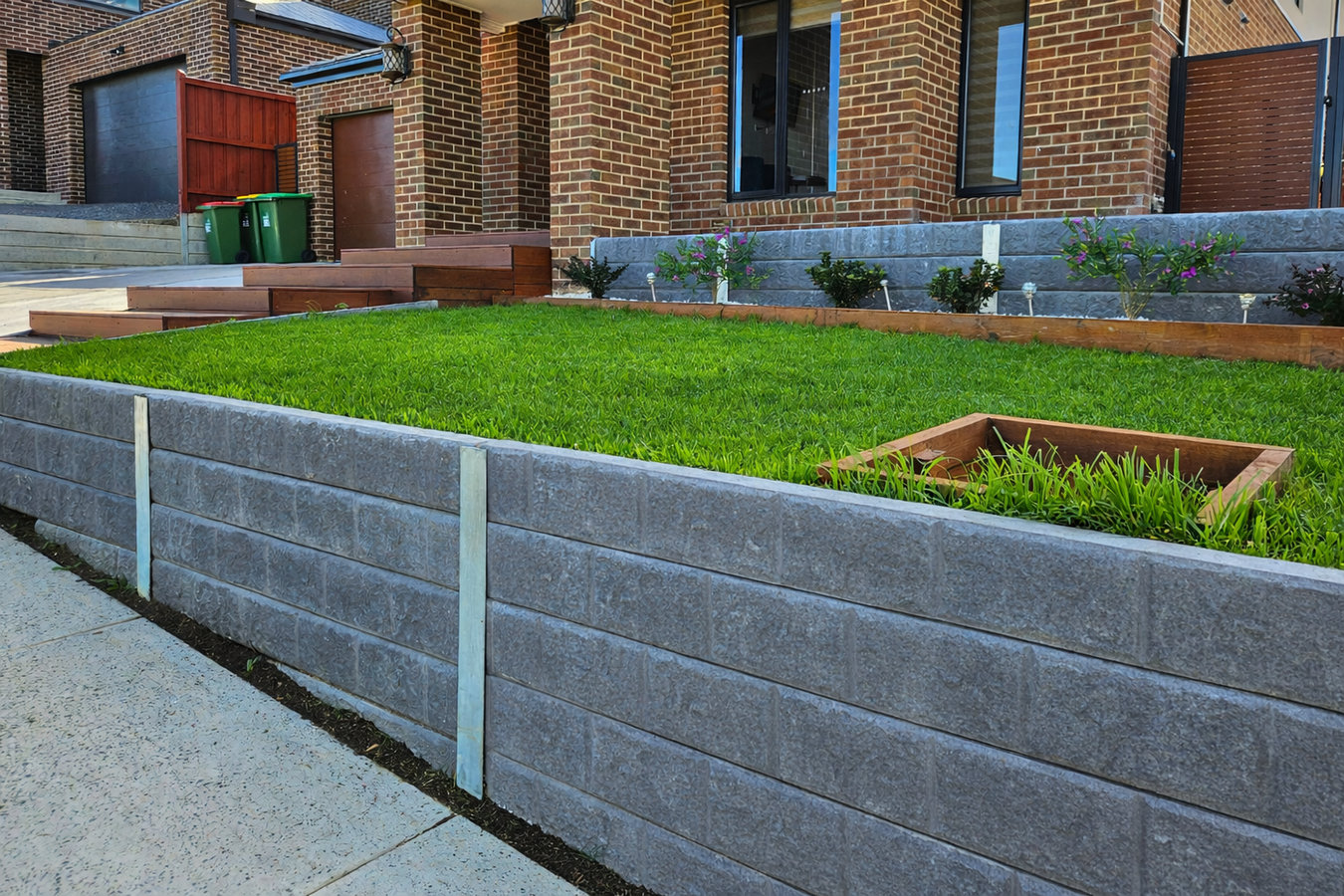
Champaign clay soil shifts, saturates, and pushes hard. We build poured concrete walls with proper drainage and steel reinforcement so your yard stays exactly where it belongs - through every wet spring and cold winter.
Concrete retaining wall installation in Champaign involves excavating the slope, setting forms, placing steel rebar, pouring the wall, and installing gravel drainage behind it - most residential walls are complete in three to six days depending on length and height, with a curing period of several weeks before the soil is backfilled under full load.
If you are watching a slope in your yard lose ground after every heavy rain, or if an existing wall has started to lean or bow, waiting makes it worse and more expensive to fix. Champaign concrete retaining walls have one job: hold the earth in place permanently so erosion stops and your yard becomes usable again. For projects that also involve leveling the ground underneath a structure, we often pair retaining wall work with concrete footings to make sure everything is sitting on solid, stable ground.
A retaining wall is only as good as what you cannot see - the drainage behind it. In Champaign, where clay soil holds water like a sponge, that hidden layer of gravel and pipe is what keeps the wall standing year after year.
If bare patches, ruts, or small channels appear on a sloped area of your yard after heavy rain, that is erosion happening in real time. Champaign's spring rain season can accelerate this quickly on clay soil that sheds water rather than absorbing it. A retaining wall stops the cycle by holding soil in place permanently.
A wall that was once straight but now leans noticeably toward the yard - or shows a visible bow in the middle - is under more pressure than it was designed to handle. This is especially common in Champaign after a wet winter, when saturated clay soil has been pushing against the wall for months. A leaning wall can fail suddenly and will not fix itself.
If part of your yard is too steep to mow without a struggle, or too unstable to plant anything that stays put, a retaining wall can turn that slope into a flat, usable terrace. Many Champaign homeowners use this approach to reclaim backyard space for gardens, patios, or play areas.
When graded soil near your house shifts or settles over time, it can direct water toward your foundation instead of away from it. Standing water close to your home's base after a storm is a warning sign - left unaddressed, this kind of drainage problem can eventually reach your basement or crawl space.
Every retaining wall we build is poured concrete with steel rebar inside and a gravel-and-pipe drainage system behind it. The drainage step is not optional in central Illinois - clay soil that saturates after rain generates enormous lateral pressure, and a wall without drainage behind it will not last. For homeowners who want to finish the area above or below the wall with a walking surface, we also handle concrete floor installation so the whole project gets done by one crew with one consistent approach.
Wall heights, site access, and soil conditions all affect the scope and cost of a project. Walls under four feet are generally straightforward. Taller walls require more reinforcement, more engineering review, and a city building permit - which we handle on your behalf. Whether you need a short decorative wall to define a garden bed or a full structural wall to stop an eroding hillside, we assess the site in person before quoting so you get an accurate number upfront.
Best for slopes with significant grade changes or erosion risk - full rebar reinforcement, drainage, and permit handling included.
For homeowners who want to define planting beds, terraces, or yard borders with a clean, permanent concrete edge.
Ideal for walls that are leaning, cracked, or failing - full removal of the existing structure and rebuild with proper drainage from the ground up.
For yards where water pooling or drainage is the root problem - paired with wall construction for a complete, lasting fix.
Champaign sits on deep glacial clay - the kind of soil that holds water after rain and pushes hard against anything in its path. That means a retaining wall here faces more lateral pressure than the same wall would in a sandier or better-draining location. The freeze-thaw cycle adds another layer of stress: ground that freezes and thaws repeatedly through a Champaign winter expands and contracts behind a wall, and walls without adequate drainage or a cold-weather concrete mix can crack or shift within a few seasons. Illinois State Geological Survey research on regional glacial soils confirms that Champaign-area clay is among the most expansive in the state - which is exactly why drainage behind any wall here is not a nice-to-have but a requirement.
Spring is when most retaining wall calls come in around here. After a wet winter, homeowners in Urbana and Savoy notice that walls are leaning, soil has shifted, or erosion has gotten worse. The problem is that spring is also the busiest season for concrete contractors in central Illinois, which means lead times stretch out fast. If you are seeing warning signs now - a lean, a bow, or soil moving after each rain - calling sooner rather than later puts you ahead of the rush and protects your yard from another season of damage.
Send a message or call and we get back to you within one business day. We will ask a few basic questions about your slope, your existing wall if you have one, and what you are trying to accomplish.
We come out in person - typically a 30 to 60 minute visit - to look at the slope, soil, drainage, and access. You get a written estimate that covers the full scope with no vague line items. For walls over four feet, we walk you through the permit process at this stage.
The crew excavates the area, sets forms, places rebar, and pours the wall. Utility lines are marked before any digging starts - required by Illinois law, and we handle it automatically. Expect equipment, noise, and some disruption during this phase; the crew cleans up each day.
Before soil goes back behind the wall, we install gravel and drainage pipe so water can escape rather than build up pressure. Once backfill is complete and the wall has cured, we do a final walkthrough together so you can inspect the work and ask any questions before we leave.
Free written estimate. Permit handling included. We respond within one business day.
(217) 803-9330We install gravel backfill and perforated drainage pipe behind every wall we build - not as an upgrade, but as a standard part of the job. In Champaign's clay-heavy soil, this is the single most important factor in how long a wall lasts. Skipping it is the most common reason walls in this area fail within a few years.
Concrete handles downward pressure well but needs reinforcement to resist the sideways force of soil pushing against it. Every wall we pour includes rebar placed at the correct spacing and depth for the wall height and site conditions. That reinforcement is what keeps the wall upright when the ground saturates and pushes hard.
We have built retaining walls across all 12 of our service communities in central Illinois - from Champaign and Urbana to Bloomington, Decatur, and Springfield. Every area has the same clay soils and the same freeze-thaw winters, and we bring the same drainage-first approach to every job regardless of location.
We pull permits for every wall that requires one under Champaign's building code and coordinate the city inspection before the job is closed out. That creates a paper trail showing the wall was built to code - which matters if you ever sell your home. The City of Champaign Building Safety Division handles permit applications for the area, and we work with them regularly.
Every one of these things - drainage, reinforcement, permits, local coverage - adds up to a wall that is still standing and still doing its job years from now. That is the only kind of retaining wall worth building.
New basement and garage floors poured with proper base prep and control joints - the right next step after leveling a retaining wall area.
Learn moreDeep footings for walls, additions, and structures that need a stable base in Champaign's frost-susceptible clay soils.
Learn moreSpring fills fast in Champaign - reach out now for a free estimate and lock in your project date before the rush hits.